Table Of Content
Nevertheless, the unusual presentation of some of their offerings make them noteworthy examples of presidential relics. Even before he was elected president, Washington understood that his role as the central military strategist of the American Revolution had set him on the fast track to immortality. He patiently posed for Charles Willson Peale, Gilbert Stuart, Jean-Antoine Houdon, and John Ramage (see Fig. 6a), to name just four of the artists who recorded his likeness. In Washington’s view, portraitists held “the keys of the gate by which Patriots, Sages and Heroes are admitted to immortality.”1 Could he have felt the same way about his barber? It isn’t clear why the hair was placed inside a book, or how that book came to Union, but the Schuyler family certainly had close ties to the college. India Spartz, head of special collections and archives at Union’s Schaffer Library, is now working to preserve the hairs, which the college plans to put on display.
Subscribe to History Facts
Wendy MacNaughton draws people, cats, bottles, scenes, faces, places. If, totally out of the blue, I call her and say, “Can you imagine Leonardo da Vinci’s personal notebook or George Washington getting his hair done? If you want to see what she’s up to right now, you’ll find more of her work here.
George Washington’s Hair
Lock of George Washington's hair sells for almost $40,000 - New York Post
Lock of George Washington's hair sells for almost $40,000.
Posted: Mon, 05 Apr 2021 07:00:00 GMT [source]
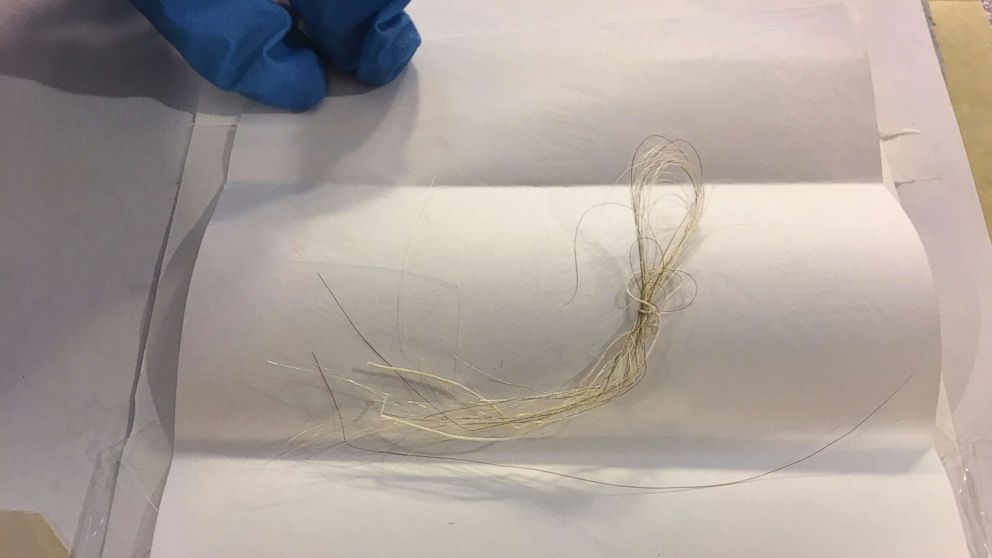
In recent days, after Union College announced the discovery, there has been a high level of excitement on the liberal arts college’s snow-covered campus and it has drawn attention from around the country. Unlike those who chose to wear an already styled wig over their natural hair, Washington’s hair would have taken much longer to style each day. The dedication to his appearance was a trait that Washington shared with his wife Martha, who also had a love of fine fashion and thoughtfully crafted hair. Early on in their marriage, George and Martha Washington chose to support American-made designers and merchants to show their support for the revolution. A librarian cataloging historic books in the Schenectady, New York, school's archive believes he stumbled across a lock of George Washington's hair neatly tied with a bow and kept in an envelope. But college officials do not want to risk destroying the sample by conducting a DNA test.
Harriet Tubman Brought to Life
However, it’s not clear how the envelope ended up inside the almanac, and how the almanac make it to the college’s library. To make sure the wax figures would look like the real George Washington, the hair they used must be the right color. Because in the 18th century it was common to keep small locks of hair that belonged to someone you loved or admired. Mostly hidden from public view, like an embarrassing family secret, scores of putative locks of George Washington’s hair are held, more than two centuries after his death, in the collections of America’s historical societies, public and academic archives, and museums. Excavating the origins of these bodily artifacts, Keith Beutler, PhD ’05, uncovers a forgotten strand of early American memory practices and emerging patriotic identity.
Finding a Lock of George Washington’s Hair, and a Link to American History
Then, Mr. Myers found an envelope slipped into the almanac, its paper as brittle as the rest of the book’s pages. It was inscribed in cursive with initials that he did not recognize and at the top, “Washington’s Hair.” Inside, he found a lock of grayish-colored hair tied together with thread. Once gathered at the back, hair was braided or sometimes just tied at the neck by a strap or, on formal occasions, a ribbon. Washington would occasionally bunch his ponytail into a fine silk bag, where it would bob at the back of his head. Luckily, small silk pouches could be tied around the long hair at the back of the head to contain any powdery locks that could dispense powder everywhere.
As Beutler recounts, ordinary Americans successfully enlisted memory practices rooted in the physical to demand a place in the body politic, powerfully contributing to antebellum political democratization. According to the college’s press release, the almanac probably belonged to Eliza’s brother, Philip Jeremiah Schuyler (their father, Philip John Schuyler, was one of Union College’s founders). Between the pages, researchers found an envelope containing Washington’s hair. The notes written on this envelope implied that Eliza had given the hair to her son James, and that James given it to his granddaughters.
There's a lock on display at Mount Vernon, for example, which his wife Martha is said to have cut from his head at the end of his presidency and given to friends, who put it in a locket. There are a few interesting myths about Washington’s appearance that have somehow persisted until today. Washington did wear dentures in the later years of his life, but they were likely made of ivory. The myth that they were wooden originated in the 1800s, possibly because Ivory dentures became easily stained. How did a Founding Father’s follicles end up in a dusty almanac stored at Union College?
Sign up for Inside History
The couples were close friends, and in the 18th and 19th centuries, it was common practice to give locks of hair to loved ones as a gift. The Smithsonian, in fact, is home to a framed display containing the hair of the first 14 American presidents. As Europeans had done with saints in the Middle Ages, Americans for most of the century that followed Washington’s death, craved physical vouchers of their fallen hero.
His mission was to take a life mask - a plaster cast of Washington’s face - which he would then use to create sculpture copies (below right). The mask was used to sculpt what’s known as “Washington’s Official Likeness” - a lifesize sculpture located in the Virginia state Capitol (below left). "It is a way of feeling like you are in touch with a tangible connection to the man who is regarded as the indispensable figure in the founding of our country," Schoelwer says. "The Hamilton family gives it a good bit of credibility," Schoelwer says, although she is unable to authenticate the school's claim.
As Beutler recounts in vivid prose, these and other ordinary Americans successfully enlisted memory practices rooted in the physical to demand a place in the body politic, powerfully contributing to antebellum political democratization. Between 1790 and 1840, popular memory took a turn toward the physical, as exemplified by the craze for collecting locks of Washington’s hair. These new, sensory views of memory enabled African American Revolutionary War veterans, women, evangelicals, and other politically marginalized groups to enter the public square as both conveyors of these material relics of the Revolution and living relics themselves.
And if you enjoy presidential hair stories, here’s the other Big Guy, Abe Lincoln, on a day in 1857 when he clearly lost his comb. An attendant would pump a cloud of powder from a small nozzle and let it settle on the hair. But Washington, says biographer Ron Chernow, would dip a puff, a snakelike bunch of silk striplings—into a powder bag, then do a quick shake over his bent head. When being powdered, it was traditional to wear a “powdering robe,” basically a large towel tied around the neck, to keep from being doused.
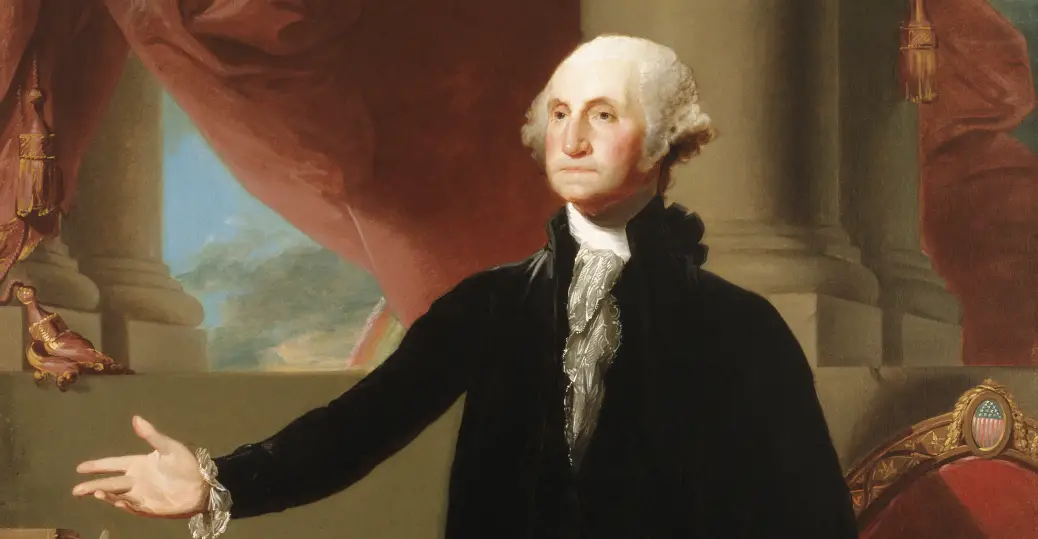
George would (likely) don a powdering robe, dip a puff made of silk strips into his powder of choice (there are a few options for what he might have used), bend his head over, and shake the puff out over his scalp in a big cloud. Spartz is working with a local conservator to figure out how best to preserve the precious lock of hair — and then she wants to display it with the almanac for the public to enjoy. To assess the hair’s authenticity, Union College sent photos of the six-inch strands and the materials they were found with to John Reznikoff, a manuscripts and documents dealer who also has a huge collection of famous people’s hair. Reznikoff has locks from John F. Kennedy, Napoléon Bonaparte, and Ludwig van Beethoven. He even has a sample of Lincoln’s hair with dried pieces of brain matter stuck to it, since it was plucked after John Wilkes Booth shot him in the head.
Schoelwer says short of DNA evidence, experts look at provenance. A peek inside revealed several strands tied together with a thread. The elder Philip Schuyler was one of Union’s founders and advocated for establishing the school in Schenectady instead of Albany. His portrait hangs in a campus dining hall, according to school officials. “You had to actually open the book and see it there,” marveled India Spartz, head of Special Collections and Archives at Union’s Schaffer Library. Beutler maintains that “in the period between 1790 and 1840 … Americans increasingly embraced reductive materialist views of memory,” influenced by “such ideas as physiognomy, brain localization, and their popular combination as phrenology.” Each chapter of his...
For the next several weeks, the college staff reached out to every George Washington hair expert it could find. Except, Myers didn't get to read any of that before he flipped the front cover open and saw a tiny envelope sitting loose inside, upon which was written "Washington's hair." The book, as you might expect from an almanac, is not exactly thrilling reading. It is full of population estimates and monetary calculations. Schuyler had written notes in the margins about preserving beef, and who was in Congress and who had left Congress, and his business affairs.
Union College researchers discovered the hair while taking the library’s inventory. They say this particular clip from Washington—born on February 22, 1732—seems to have been passed down through the families of Alexander Hamilton and his wife, Eliza Schuyler Hamilton. — The red leather-bound book had long gone unnoticed, possibly for decades, shuffled around until an archivist stumbled upon it in the rows of shelves on the third floor of the library at Union College and passed it on to a librarian to be cataloged. His painful, ill-fitting dentures made Washington’s mouth bulge out; he clamped his lips to hold them in.
Perhaps Washington’s greatest wartime legacy was his decision to surrender his commission to Congress, affirming the principle of civilian control of the military in the new United States. One question a lot of our guests ask is, "Why isn't George Washington buried at the Capitol?" While George Washington's gravesite is at his home, Mount Vernon, other people tried to have him buried elsewhere upon his death. Capitol building was at one time intended to be the burial place of the first president. In his will, George Washington outlined his desire to be buried at home at Mount Vernon along with his wife and the rest of the Washington family.